RCS vs. SMS: Which texting protocol is more advantageous for your business? If you’re wondering about this, you’ve come to the right place. The fundamental need of communication is to connect and share information quickly, reliably, and cost-effectively. And, in that, two messaging protocols, SMS and RCS, often steal the limelight. However, they differ, and each has distinct pros and cons.
SMS is highly reliable, simple, has stood the test of time, and offers universal compatibility. RCS, on the other hand, is a next-generation messaging protocol with rich media support.
This blog will give you a complete overview of RCS messages vs. SMS and help you choose the right one for your business.
What is a Messaging Protocol?
A messaging protocol is a set of rules and guidelines that help in determining how messages are transmitted between devices. It ensures that data sent from one device is properly formatted and understood by the receiving device. The two most common messaging protocols are Short Messaging Service (SMS) and Rich Communication Service (RCS).
Both messaging protocols dictate the message structure, delivery methods, and supported features, ensuring seamless communication across different networks and devices.
Usually, businesses use these two protocols for sending text messages for marketing purposes. The choice of their protocol impacts messaging experience, capabilities, and effectiveness.
Let’s start by understanding these two messaging protocols in detail, how they work and differ.
What is SMS?
SMS (Short Messaging Service) is one of the oldest (dating back to 1990) and simplest messaging protocols. Despite the rise of more advanced messaging protocols and apps, SMS remains the most reliable and widely used communication tool globally.
SMS is simple:
- 160-character limit per message. If a message exceeds this limit, it gets split into segments.
- Only text is allowed. No images, videos, or rich media.
- Works on every mobile phone
- Messages are delivered through cellular networks, not the internet.
SMS does not require a smartphone, data connection, or specific app. As long as the device can connect to a cellular network, it can send and receive SMS.
Businesses can use SMS as the primary communication channel for sending transactional messages like order confirmations, appointment reminders, and two-factor authentication; marketing campaigns; and delivery notifications. SMS has a high delivery rate of around 98%, but it has some limitations. It offers no branding, no images, and no way to know if someone has read your text message.
What is RCS?
RCS (Rich Communication Services) is the next-generation messaging protocol that is designed to replace SMS. It is the same as iMessage or WhatsApp, but is built into the default messaging app on Android devices. RCS is now also increasingly supported on iOS.
RCS provides:
- Rich media support, such as images, videos, audio, and file sharing
- Read recipient and typing indicators that help know when messages are delivered and read, and when someone is responding.
- Branded messaging in which businesses can include logos, colors, and verified sender information.
- No character limit means messages can be longer than the SMS character limit of 160 characters.
- Interactive elements like buttons, quick replies, carousels, and more.
- Better functionality for group messaging
RCS message delivery depends on internet connectivity and device compatibility. Businesses can include product carousels, appointment booking buttons, interactive marketing campaigns, and branded customer conversations that feel more like app experiences than traditional text messages.
RCS vs. SMS: Feature Comparison
Here is how RCS compares to SMS.
| Feature | SMS | RCS |
| Character Limit | 160 characters | No limit |
| Media Support | Text only | Images, video, audio files |
| Read Receipts | Not available | Available |
| Typing Indicators | Not available | Available |
| Group Chat | Limited | Full support |
| Branding | Phone Number or Short Code | Verified business profile with logo and colors |
| Device Requirement | Any mobile phone | Smartphone with RCS support |
| Internet Required | No | Yes |
| End-to-End Encryption | No | Yes |
| Interactive Elements | None | Carousels, buttons, and suggested replies |
Key Factors to Consider While Choosing Between RCS and SMS
Here are a few key factors that you need to consider when choosing between RCS and MMS.
1. Reach and Adoption
SMS offers universal reach, which is its greatest strength. Every mobile device can send and receive SMS messages, which makes it an excellent tool for businesses to reach consumers.
On the flip side, RCS requires a smartphone and an up-to-date operating system, which adds cost and limits its reach. Additionally, users need to manually enable RCS even on compatible devices, leading to a fragmented and inconsistent user experience.
2. Cost and Complexity
RCS is costlier than SMS because it comes with a richer feature set. These features come with a higher cost and complexity. RCS’s higher cost and complexity discourage businesses from choosing it, especially small businesses and those who are on a tight budget.
SMS, on the other hand, offers a simple and cost-effective solution. Usually, SMS service is bundled with mobile plans, which makes it free for most users. Also, SMS is simple to use, so it doesn’t involve major development or integration costs.
3. Interactivity and Rich Media
RCS can effortlessly handle rich media and interactive content, allowing businesses to create more engaging and app-like experiences. However, these advantages come with limitations: both the sender and receiver need to have RCS enabled.
In contrast, SMS doesn’t support rich media or interactivity, but it is simple and highly reliable. SMS is guaranteed to be delivered, read, and understood, no matter which mobile device the receiver uses, their OS, or location. Businesses can use MMS as an alternative to SMS if they want to send multimedia messages.
4. Reliability and Security
SMS has a proven track record for reliability. It functions on a cellular network, so it works perfectly even when network conditions are not ideal.
On the flip side, RCS relies on the internet, so if there are network interruptions or a user is in a poor data coverage area, delivery can be affected.
When it comes to security, both RCS and SMS have their vulnerabilities. However, as RCS is more complex, it presents more attack surfaces. On the other hand, RCS offers end-to-end encryption, which is an advantage over SMS when it comes to privacy.
RCS Vs SMS: Pricing, Reach, Deliverability, and User Experience
According to studies done by Juniper Research and Mordor Intelligence , here are a few factors that determine ROI when choosing a messaging channel for your business.
| Factor | SMS | RCS |
| Pricing Model | Predictable – per message based | Varies. Per message, session, or tier-based |
| Cost Range | Approx. $0.02 to $0.012 per segment | 30% to 40% higher than SMS for rich messages |
| Global Reach | 100% mobile devices | Approx. 1 billion active users, and growing with Apple – iOS 18 support |
| Carrier Support | All carriers | All major carriers |
| Deliverability | 98% delivery rate + cellular fallback | Data connection. Fall back to SMS when unavailable |
| User Experience | Simple, text-based | App-like experiences with rich media and interactivity. |
| Set Up Complexity | Low | Higher |
When to Use RCS Messages vs. SMS?
Whether to choose RCS or SMS depends on your target audience, goals, and use case.
Choose SMS If:
- Your priority is to reach
- You are sending transactional messages
- Cost matters to you
- Your audience is global
- You need guaranteed delivery
Choose RCS If:
- Engagement matters more than reach
- Your target audience is smartphone users
- Your priority is customer experience
- You’re running marketing campaigns
How Do Businesses Use RCS and SMS?
Both RCS and SMS are effective communication methods. Here are some of the best use cases.
RCS Use Cases
Businesses should use RCS if they prioritize personalization and want to make a lasting impression with shoppers.
Suggested Replies
RCS takes conversational commerce to a whole new level. Usage of integrated action buttons can simplify user interaction. It allows for effortless responses to visual content and seamless navigation to web pages and applications with a single click.
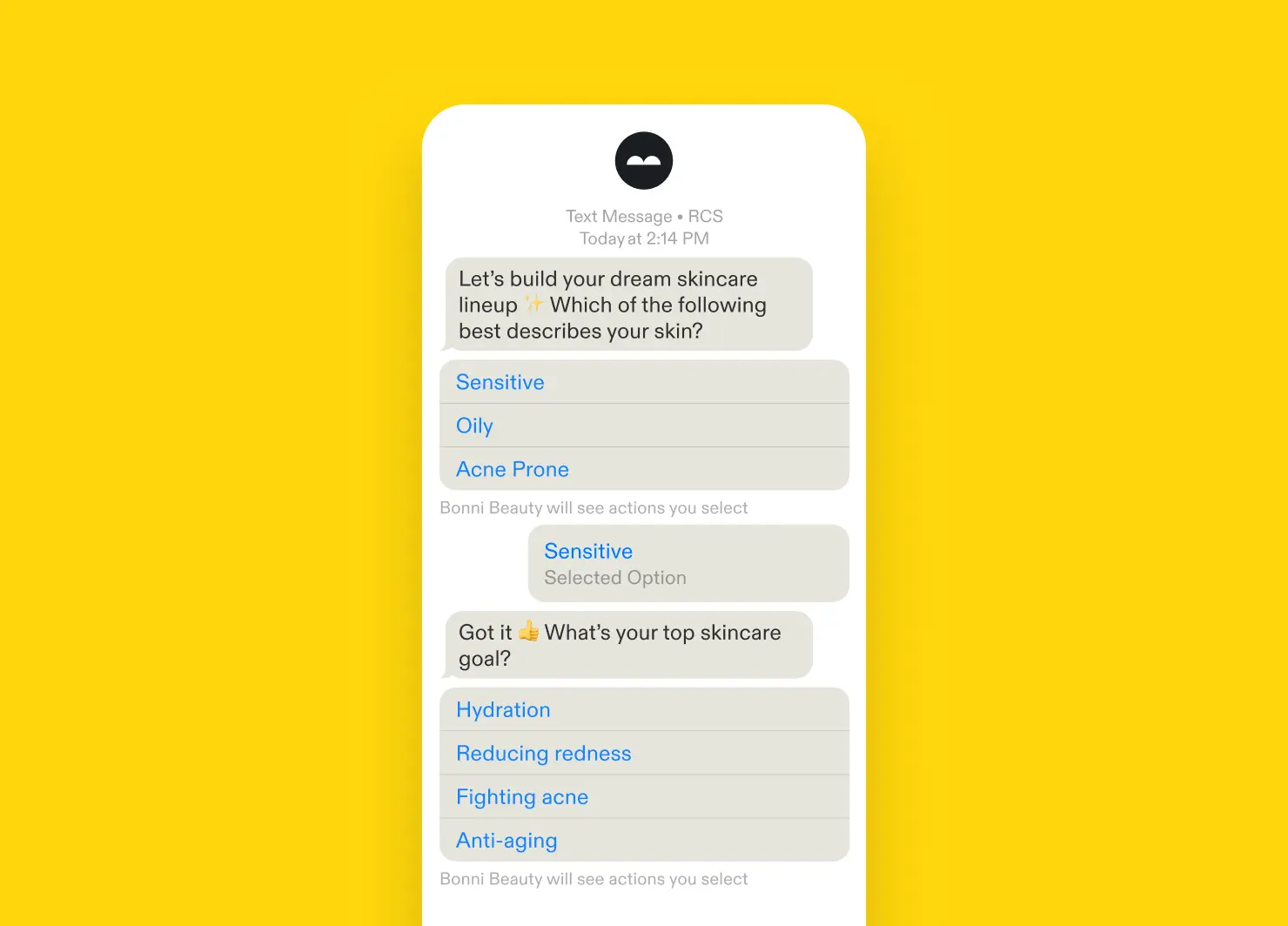
Image Source: Link
Branded Messages
Companies that want to maintain brand consistency can embed brand elements such as business name, logo, and colors using RCS. Additionally, every business using RCS is verified by Google. This verification increases the trust level of subscribers in the messages they receive from the brand, which ultimately boosts conversion rates (CVRs).
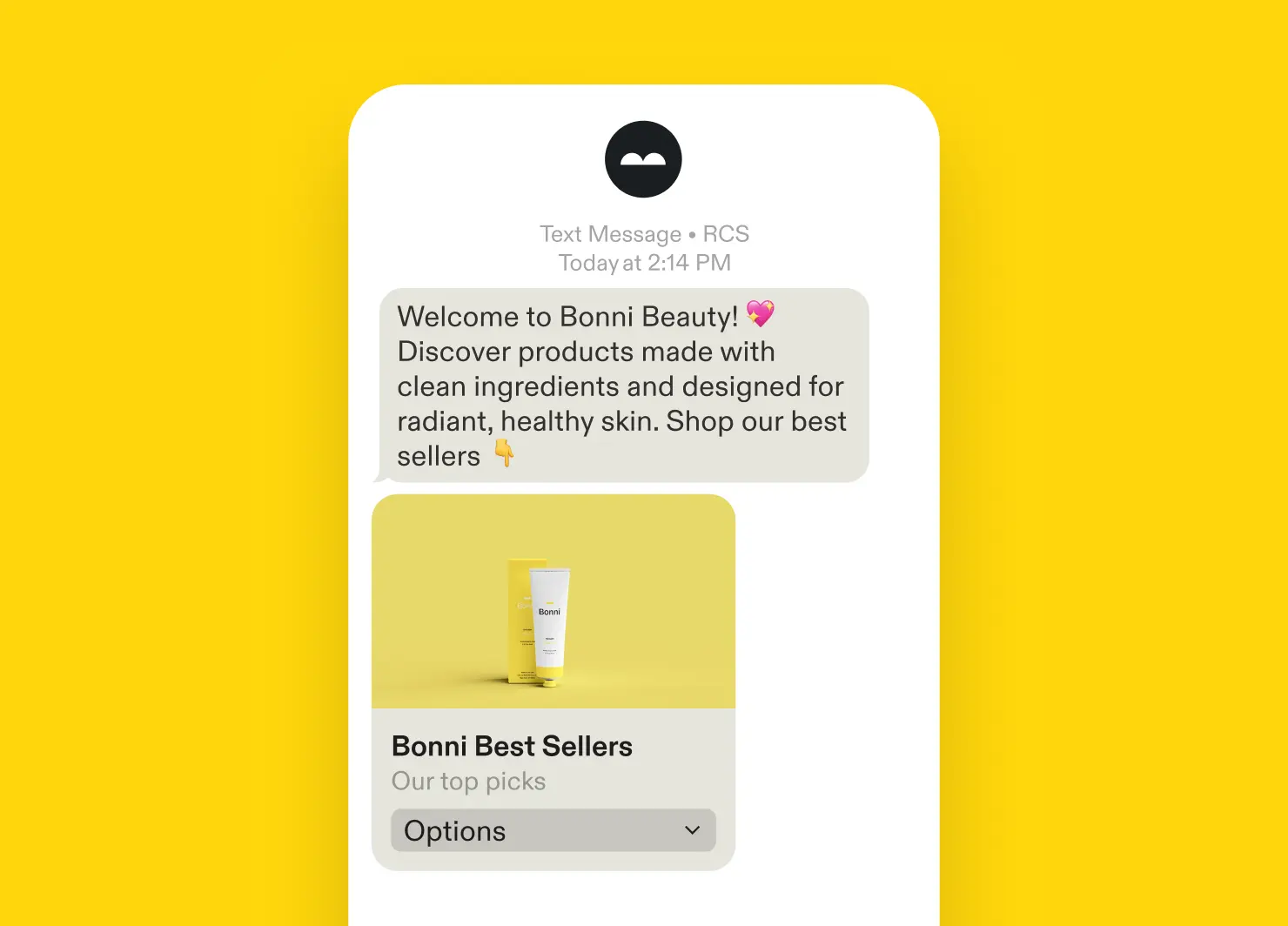
Image Source: Link
SMS Use Cases
There are some scenarios where we recommend businesses use SMS over RCS.
Urgent Messages
If you want to send urgent messages to customers, like shipping updates or delays, you should use SMS. If you want to communicate with your entire subscriber list, SMS ensures the message reaches the most people.
Broad-Reach Marketing Campaigns
If you want to target the larger portion of your subscriber list, you should use SMS. Most brands use SMS during the promotional period that happens around holidays.
Will RCS Replace SMS?
Eventually, the world will shift to RCS, but it will take time. This does not mean SMS and MMS will disappear, though you can expect a decline in their usage. Even Google has been trying to drive RCS adoption worldwide. Recent statistics suggest that there are more than 1 billion active RCS users as of late 2023, and the number continues to grow. By the end of 2030, the RCS market is expected to reach $10.93 billion .
Still, SMS and RCS will coexist, and businesses that want to succeed need to take strategic advantage of them.
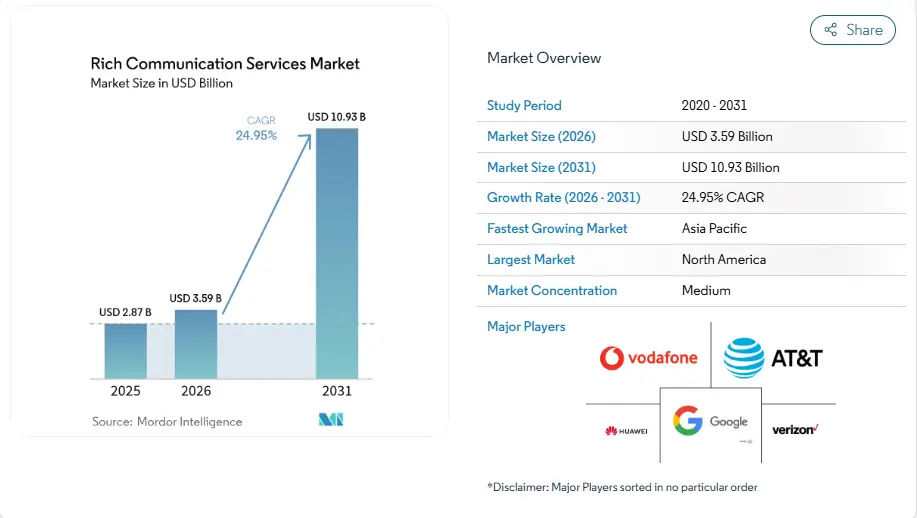
Image Source: Link
Conclusion – SMS, RCS, or Both?
RCS and SMS both offer unique advantages. SMS delivers reliability and reach. RCS supports richer, branded interactions that can transform the customer experience. So, this isn’t a debate of RCS vs. SMS. With the right governance in place, you don’t need to choose between security and usability or compliance and customer experience.
SMS’s universal reach and reliability make it indispensable for transactional messaging where RCS support is limited. Meanwhile, with rich media support, branded interactions, and verification, RCS creates experiences that feel native to the way people communicate today.
Now that Apple also supports RCS on iOS, the targetable audience has expanded. Therefore, for businesses investing in messaging as a communication channel, RCS is worth considering. We recommend that you build a messaging strategy that combines both. Use RCS for the richest customer experience and SMS as the reliable fallback.
This way, you can prepare your business for where messaging is today and where it’s going tomorrow. And, in that, Textdrip can help you. You can build your complete business texting solution with Textdrip, as it supports SMS, MMS, and RCS, allowing you to reach your customers on their preferred channels. Explore Textdrip for FREE today.
Looking for more information on SMS and RCS? Check out these other resources.
How RCS messaging impacts businesses
Future of text message marketing
Is RCS messaging taking over SMS?