One text! Yes, you read it right! That’s all it takes. As an insurance agent, you send SMS to your clients every day because you know calls go unanswered and emails are usually ignored. Texting feels helpful, human, and fast, but one unsecured text can cross the line. It is not because you meant harm or shared too much, but it is because HIPAA doesn’t forgive casual mistakes. Clients trust you with their personal and health-related information, and if that trust breaks, it’s hard to earn it back. Here’s where HIPAA-compliant SMS platforms for insurance agents will help. They are not just tools, but they’re protection.
This guide sheds light on top HIPAA-compliant SMS platforms for insurance agents that you can use to text with confidence, not fear.
Let’s first start by understanding why insurance agents use HIPAA-compliant texting .
Why Insurance Agents Must Use HIPAA-Compliant Texting
HIPAA rules are strict, for good reasons. Insurance agents usually deal with sensitive information like client names, contact details, claim updates, policy and health-related information, health insurance enrollment data, and more. If you use regular messaging apps like iMessage or Android Messages, they are not HIPAA-compliant. These apps don’t offer proper encryption, audit logs, or a Business Associate Agreement.
A HIPAA-compliant SMS platform protects your client’s privacy, insurance license, and your agency’s reputation. The best part is they’re just as easy to use as regular texting.
How Have We Selected HIPAA-Compliant SMS Platforms for Insurance Agents?
Each SMS platform we have selected for this blog is HIPAA-compliant, offers secure messaging, is user-friendly for insurance professionals, and scales with growing agencies.
Let’s explore each platform.
6 Top HIPAA-Compliant SMS Platforms for Insurance Agents
1. Textdrip – Best Overall HIPAA-Compliant SMS Platform for Insurance Agents
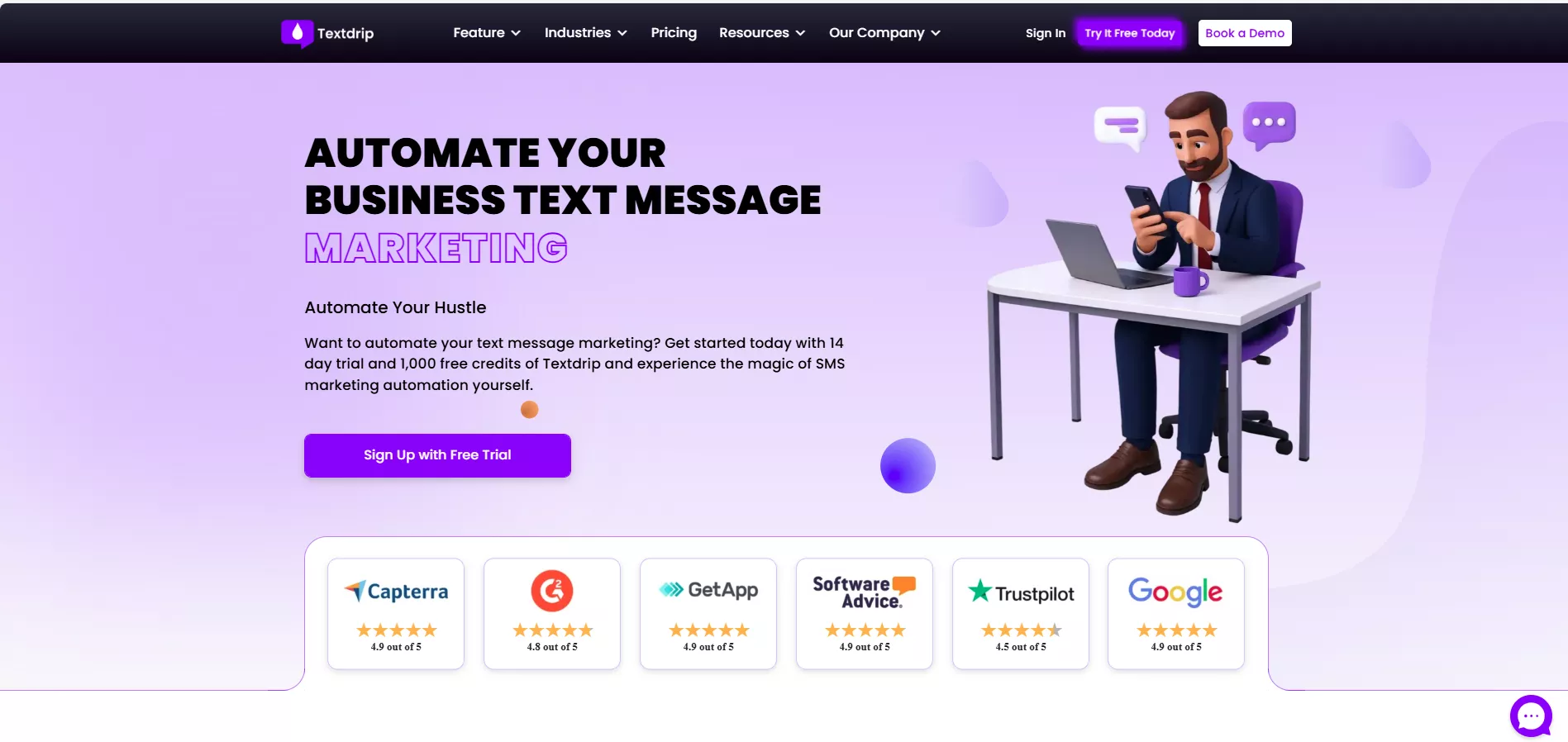
Textdrip is specifically built for insurance agents who need fast, reliable communication without compliance risks. It combines HIPAA-compliant texting with automation, which makes it super easy to manage follow-ups, reminders, and client conversations from one simple dashboard.
Agents can send secured two-way SMS, schedule text messages, and automate renewal reminders while staying HIPAA-compliant. Built-in opt-out management helps agents follow texting and consent rules with ease.
Textdrip offers integration with positiveintent.ai that helps identify message intent and engagement signals, which allows agents to communicate more thoughtfully and avoid spam-like behavior. In addition, Landline Remover automatically filters out landline numbers, which ensures messages are sent only to valid numbers, which helps save money and improve campaign performance. Textdrip is powerful yet easy to use, which makes it ideal for both solo agents and growing insurance teams.
Pros and Cons
| Pros | Cons |
| HIPAA-compliant two-way SMS | Require an initial setup time to configure automation workflows properly |
| Strong automation for reminders and follow-ups | Main focus is on SMS; it is not a full CRM or policy management system. |
| Integration with positiveintent.ai for smart texting | |
| Landline Remover improves cost efficiency and deliverability. | |
| User-friendly and scalable |
Textdrip is best for insurance agents who want compliant texting, automation, high deliverability, and intelligent messaging in one platform.
2. OhMD
The next on the list is ohMD. It’s a popular HIPAA-compliant texting software specifically designed for doctors, hospitals, clinics, and healthcare insurance agents. OhMD easily integrates with popular EHRs. This platform’s main focus is on setting up two-way compliant text messaging from the already established office number.
It offers various features to improve customer acquisition, retention, and overall engagement, like two-way texting , automated texting, Webchat text, broadcast texting, team collaboration, EHR integration, among others.
This texting software easily integrates with your existing CRM/tools that help simplify the insurer’s journey.
Pros and Cons
| Pros | Cons |
| User-friendly | Limited automation features |
| Quick to set up | Not ideal for large agencies |
| Customer service is responsive | Expensive for solo insurance agents |
| Secure, HIPAA-compliant messaging | Not all features are available in its app version. |
OhMD is the best for solo insurance agents who want basic, secured texting without any complexity.
3. TigerConnect – Perfect for Larger Insurance Teams
Up next on the list is TigerConnect. It is a HIPAA-compliant texting platform that enables insurance teams to communicate safely and securely through SMS. TigerConnect enables customer-centric, efficient care to keep text messages HIPAA-compliant. This platform is specifically built for structured, team-based communication and supports strict access control.
TigerConnect’s key features are auto-deletion of messages, telehealth functionality, EHR integration, delivery and read receipts, two-way texting, group texting, etc. The platform also offers secure messaging, shared inboxes, and role-based permissions. Audit trails make internal reviews and compliance checks easier.
However, TigerConnect may feel expensive and heavy for solo insurance agents or small teams.
Pros and Cons
| Pros | Cons |
| HIPAA-complaint messaging | Features and customization options are limited |
| Intuitive and user-friendly interface | Customer support is not very responsive |
| Secure texting | Too complex for small insurance agencies or solo insurance agents |
| Strong compliance tracking | Higher cost |
This SMS platform is ideal for large US insurance brokerages and enterprise-level agencies.
4. Spruce Health
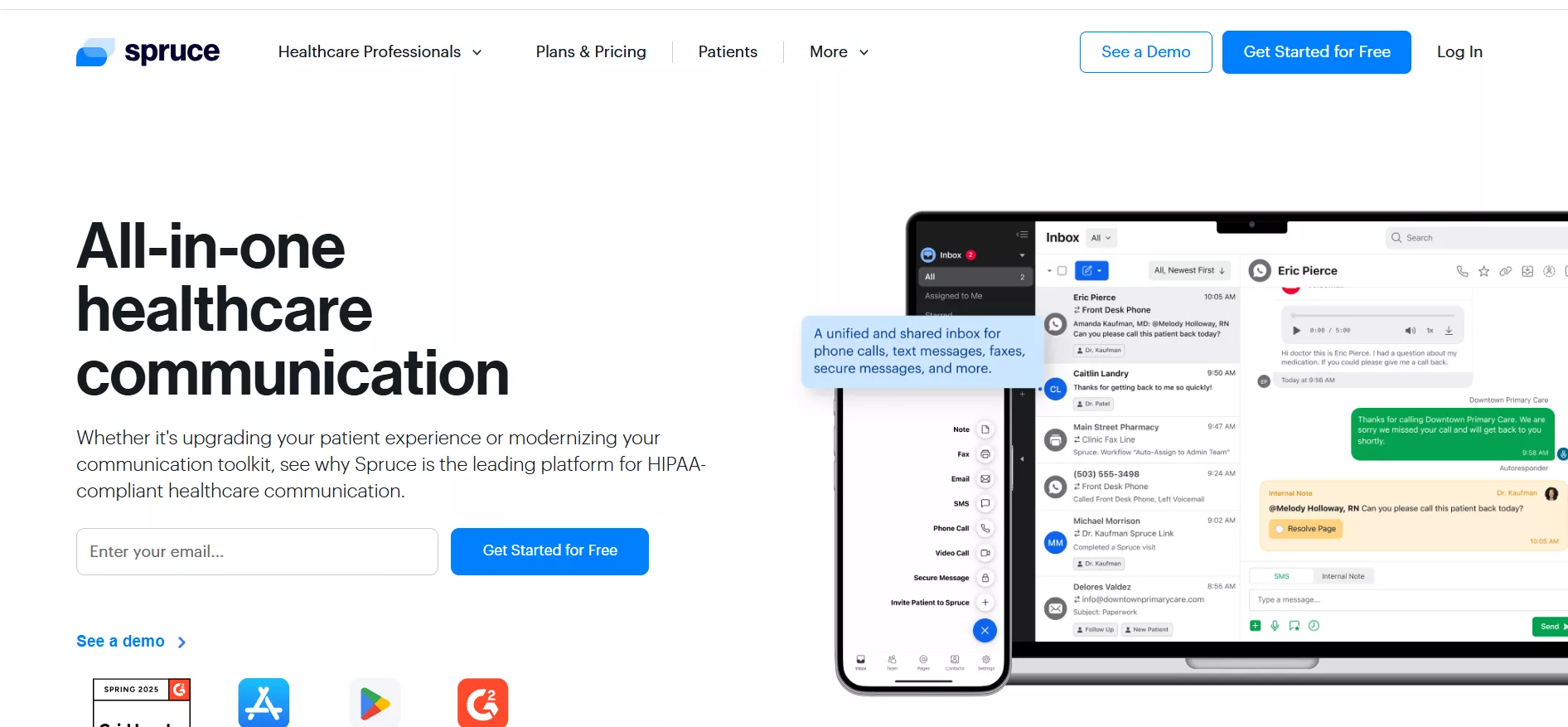
The next on our list is Spruce Health. It is a HIPAA-compliant SMS platform for insurance agents, patients, and healthcare service providers. The platform comes with both in-app and SMS channel options.
Insurance agents can invite their customers to download the app for texting or use Spruce-managed phone numbers to send SMS texts to patients. If a customer wants to use the texting functionality, he/she must consent to receive text messages.
Spruce Health’s key features are a mobile app, faxing, and digital payments. You can also delete, remove, and restore messages. The platform offers HIPAA-compliant two-way texting and appointment reminders. Its interface is clean and easy to use, which helps insurance agents to stay responsive without risking compliance.
On the other hand, if you’re an insurance agent who is looking for large-scale automation, this platform is not ideal for you.
Pros and Cons
| Pros | Cons |
| Easy-to-use interface | Not ideal for bulk campaigns |
| HIPAA-compliant texting | Limited SMS automation for scaling |
| Excellent for follow-ups and reminders |
It is best for client-focused insurance agents who value engagement.
5. Luma Health
Another popular HIPAA-compliant texting service is Luma Health. This platform’s main goal is to simplify patient/customer access to healthcare providers/insurance agents. It simplifies the patient journey through functionalities like appointment scheduling, patient feedback, waitlist management, and more. The platform offers easy EHR integration to simplify operations and reduce manual workload.
Recently, Luma Health has introduced an AI-powered toolset to make patient scheduling communication more automated and intuitive.
Luma Health comes with impressive features like EMR integration, automation, scheduling, broadcast messaging, reviews, and reputation management.
Pros and Cons
| Pros | Cons |
| Easy integration with multiple EHRs | No live support |
| Privacy control to ensure data security | Can be expensive for small practices |
| User-friendly interface | Limited features |
| Good automation capabilities | Limited customization |
Luma Health is ideal for healthcare providers looking for appointment management communications.
6. Klara – Best for Insurance Agent and Customer Collaboration
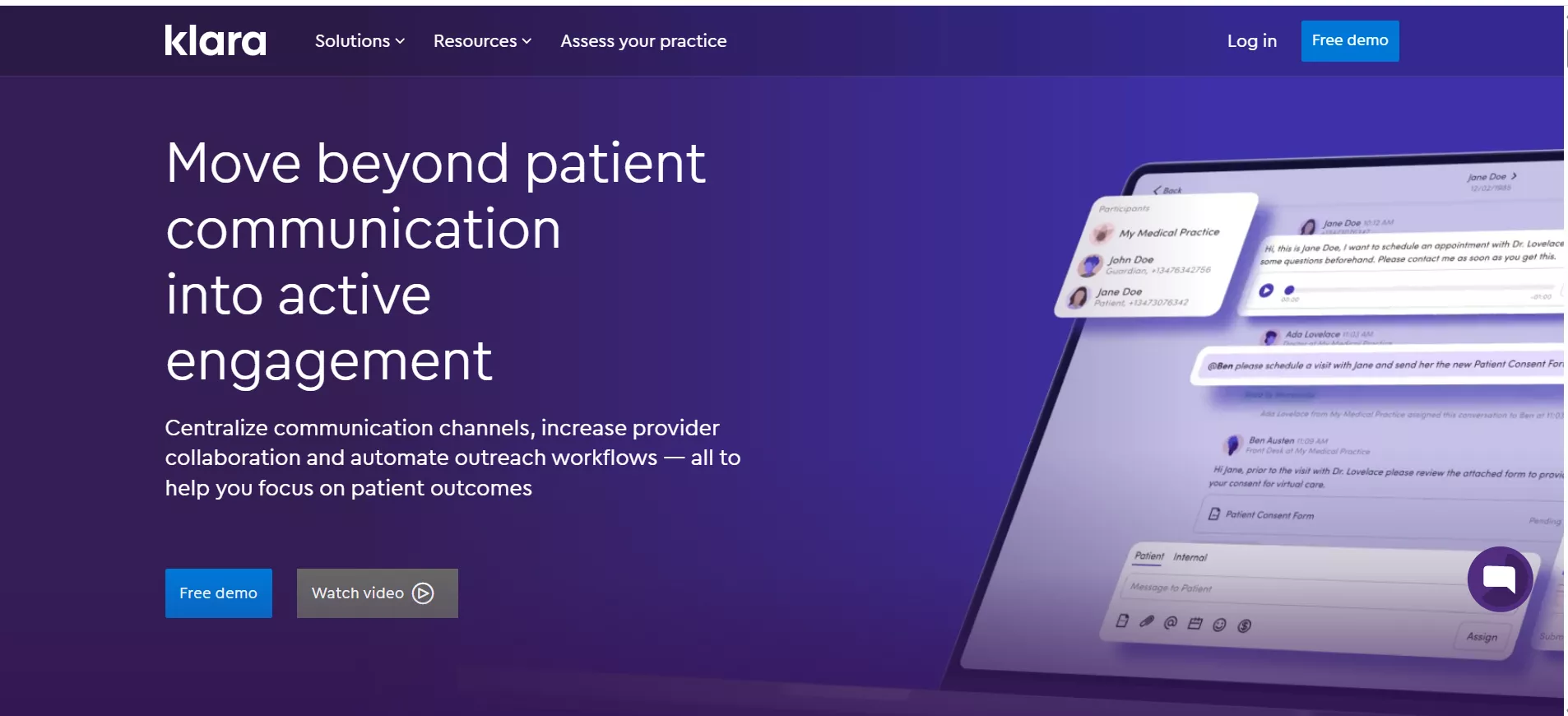
Last but not least on the list is Klara, which is a secure HIPAA-compliant texting software. Its two-way texting features allow customers/patients to communicate with their healthcare provider/insurance agents via text messages. For that, they don’t need to log in, require a password, or download their app.
It offers encryption, 2FA, and secure texting to help keep sensitive information safe and fully compliant with the HIPAA guidelines. Mainly, Klara operates in four major areas: workflow automation, telemedicine, patient/customer communication, and provider collaboration.
The main key features of Klara are a unified inbox, EHR integrations, integrated telemedicine, missed call text back, and automated healthcare texting.
Pros and Cons
| Pros | Cons |
| The platform is intuitive and user-friendly. | The platform can feel rigid for smaller teams. |
| It enables timely and secure communication. | Integration with the existing tool is complex. |
| This platform is more mobile-responsive. | Its customer service is not responsive. |
| One of the most secure texting platforms for healthcare providers. | Team collaboration capability is unreliable |
Klara is best suited to insurance agents and clinics looking to simplify their administrative workflows and patient communication through text.
HIPAA-Compliant SMS Use Cases With SMS Examples
HIPAA-complaint SMS works best when texts are used for notifications and reminders. Let’s check out the real-world use cases for insurance agents.
1. Policy Renewal Reminders
Policy renewals are time-sensitive. A short, friendly reminder helps clients take action without exposing sensitive information.
Hi Thomas, this is EverGuard Insurance Agency, reminding you that your policy renewal window is approaching. Please check your email for the next steps. Reply STOP to opt out.
2. Appointment or Consultation Confirmations
When you confirm appointments through text messages, it helps reduce no-shows and keeps communication professional.
Hello Amanda, ShieldLine Insurance Services is confirming your scheduled consultation tomorrow at 3 PM.
Let us know if you need to reschedule.
Reply STOP to opt out.
3. Claim Process Updates
Clients usually feel anxious during claim processing. Simple status updates help without sharing private details.
Hi Brian, this is TrueNorth Insurance Group with an update on your request. Our team is reviewing it and will follow up soon. Reply STOP to opt out.
4. Document Request Reminders
When you send a text reminder instead of sending emails multiple times, it speeds things up.
Hello Natalie, SummitCare Insurance Advisors is reminding you to upload the requested document when convenient.
Please contact us if you have questions.
Reply STOP to opt out.
5. Follow-Up After a Meeting or a Call
Following up builds trust and shows professionalism without oversharing information.
Hi Kevin, thank you for speaking with Pioneer Insurance Solutions today. We’ve shared the next steps via email. Reply STOP to opt out.
6. General Service Notifications
Every message does not need action. Some messages simply keep clients informed.
Hello Rachel, OakBridge Insurance Consultants is reaching out with an important service notification.
Please check your email for details.
Reply STOP to opt out.
When you send these types of messages using HIPAA-complaint SMS platforms, it keeps clients informed without exposing sensitive data.
Even if you use a HIPAA-compliant SMS platform, you should never text social security numbers, medical details, full policy or claim numbers, or login credentials
Remember that your text messages should notify customers, not explain everything.
How HIPAA-Compliant SMS Helps Insurance Agents Grow Faster
Secure texting helps you:
- Get faster responses
- Reduce no-shows
- Build long-term trust
- Look professional and reliable
In short, in a competitive insurance industry, trust helps close more deals.
Why Textdrip Is the Best HIPAA-Compliant SMS Platform for Insurance Agents
All the text message marketing platforms listed above are HIPAA-compliant and reliable. However, if you want the best balance of compliance, automation, user-friendliness, and scalability, Textdrip is the ideal one. It helps you stay HIPAA-compliant, automate follow-ups and reminders, communicate professionally with clients, and save time without risking compliance.
If you want to see how it works for your insurance business, take a FREE Textdrip demo and experience how easy HIPAA-compliant texting can be for insurance agents. Practicing secured texting is not just about avoiding penalties, but it’s about earning trust, protecting clients, and growing your insurance business the right way.