13 Apr 2026

Kath Galpo
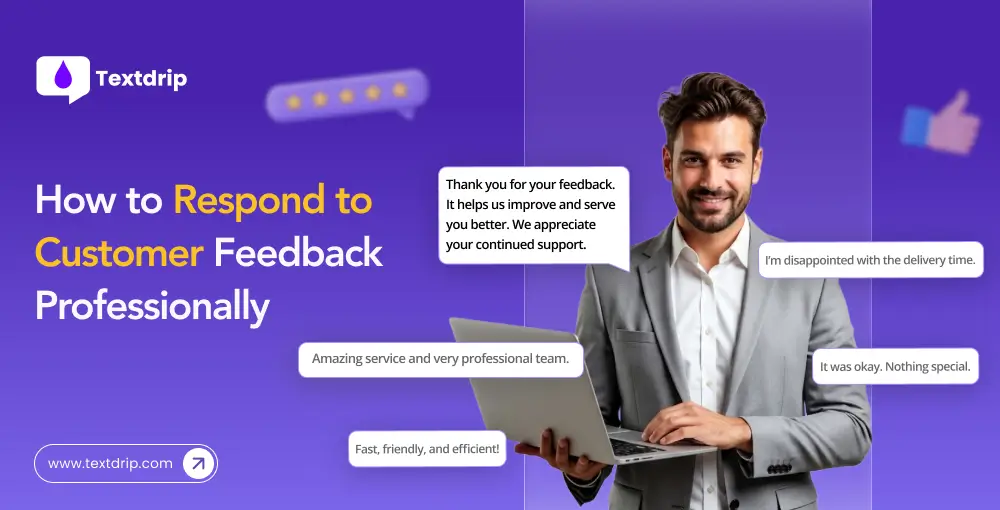
13 Apr 2026
Kath Galpo
Do you know what the most valuable asset your business can have is? Customer feedback. Why? It provides insights into customer experience and highlights areas for improvement while offering an opportunity to build strong relationships with your prospects and existing customers.
Customers’ feedback is no longer private. It lives online and sits on your Google profile. It shows up when someone searches for your name at 11 PM before making a purchase. So yes, your response matters.
Collecting feedback alone is not enough; how you respond to it affects customer satisfaction, loyalty, and brand reputation.
45% of customers say they love engaging with businesses that respond to negative reviews.
89% of consumers read how businesses respond to reviews before making a purchasing decision.
Many businesses reply just to check the box. They give a generic response or apology, such as “Thank you.” or they use copy-paste review response templates. Technically, they’ve responded. But that’s not the same as knowing how to respond to customer feedback in a way that actually builds trust.
If you want to learn how to manage reviews strategically, read our in-depth guide to feedback response examples and review responses for businesses. However, here in this blog, we’re only focusing on the practical side: what to say, how to say it, and what not to mess up.
However, first understand what your reply actually does.
Understand that when someone leaves a review, they’re not just talking to you. They’re also talking to everyone who reads it next.
I’ve noticed this: your prospects rarely judge you by the complaint itself. They judge you by how you handle it.
That’s the real game.
If you’re serious about learning how to respond to customer feedback, you need to stop thinking emotionally and start thinking publicly. You have to remain calm, composed, and clear.
You don’t need any script to respond to customer reviews; what you need is structure.
Here is the simple structure that you need to follow:
That’s it. No essays or defensive paragraphs explaining your side of the story. Don’t use a passive-aggressive tone. Accept that yes, people can tell.
Now that you know how to craft your feedback response, let’s understand how to respond to customer feedback professionally.
Positive reviews deserve more than just “Thanks!”
If your customer leaves feedback like: “Amazing service and very professional team.”
Don’t just reply with: “Thanks for your feedback.” Doing so sounds lazy.
Instead, personalize your response like this:
It’s simple and feels human.
If you want a deeper breakdown of positive feedback responses, check out our latest blog on positive review response examples that build customer loyalty.
When someone leaves five stars, they’re endorsing you publicly.
For example,
If a customer gives feedback like this:
★★★★★
“Fast, friendly, and efficient!”
You should give a solid reply like this:
This kind of response is short, warm, and forward-looking.
That’s how you respond to a customer review without overdoing it.
This is the case where your business either looks professional or looks insecure.
If a customer provides criticism about what they don’t like about your product, service, company, or offerings, you should respond to negative feedback calmly.
Suppose the customer says: “I’m disappointed with the delivery time.”
Do you know what could be your wrong move? Explaining why the courier messed up, blaming volume, or writing a three-paragraph justification.
Instead, you should respond like this:
Have you noticed what’s missing in this? Excuses.
If you’re learning how to respond to reviews, understand this clearly: accountability builds more credibility than perfection ever will.
Neutral reviews are quite tricky because customers are neither impressed with your business, service, or product nor are they angry.
For example:
If a customer leaves feedback like this: “It was okay. Nothing special.”
You could ignore it. Many do, but that’s a missed opportunity.
Instead, you should respond like this: “Hi Emily, thanks for your honest feedback. We’re always trying to improve. If you’re open to sharing what could’ve made it better, we’d genuinely appreciate it.”
Neutral feedback offers useful insight and an opportunity to improve. So, use it wisely.
Undoubtedly, feedback response templates help, especially when you’re handling volume. But don’t let them turn your brand into a robot.
You can use a simple positive response template:
And, negative response template:
Always remember: Templates are starting points, not final drafts.
So,
I’ve seen this many times. Businesses get defensive when they get negative reviews. Some often over-apologize for things that aren’t even their fault. Others write corporate replies that sound like legal disclaimers. And some simply copy and paste the customer feedback response template 40 times.
If you want to master responding to customer feedback, here’s our take: You should respond like a composed human, not like a policy document.
Keep it short, respectful, and real. Use automation where necessary, but don’t use it blindly or let it make your brand sound robotic.
Every review is public proof of how you operate under pressure. It is an opportunity for a business to strengthen brand trust, improve service, and build loyalty. You can’t control what customers write, but you can absolutely control what you write back. And your response shapes how future buyers see you.
However, real work starts even before you receive any customer feedback. When you follow up with customers at the right time, it increases the chances of getting genuine and positive feedback. And, in that, Textdrip helps. It helps you run automated SMS drip campaigns and follow-up sequences to keep your customers engaged and make them more likely to share their experience when it matters most.
You still respond to reviews manually and thoughtfully, but Textdrip handles the groundwork that makes those reviews come in more consistently.
In short, knowing how to respond to customer feedback is one thing, but building a solid system that keeps customers engaged before and after they purchase your service or product drives long-term growth.
To see Textdrip in action, book a demo today and start responding to customer feedback efficiently and consistently.
SMS campaigns can improve travel agents’ marketing by offering timely, tailored deals and updates. It will increase customer engagement and booking rates. Through automated SMSs, travel agents can also provide quick communication to resolve customer queries and build trust quickly.
Generally, the ROI of SMS marketing for travel agents is high because it improves the open and conversion rates, driving increased bookings and customer retention. In short, its low cost per SMS and high ROI makes it the perfect choice for targeted updates and promotions. As it is cost-effective, it will improve overall marketing efficiency.
To increase immediate bookings, travel agents can send SMS regarding exclusive offers and discounts, flash sales, and limited-time offers.

Kath is a dedicated Customer Service Manager who takes pride in supporting Textdrip’s customers with care and efficiency. She’s passionate… Read More
09 Jun 2026

Philip Portman
08 Jun 2026

TJ Gaushas

28 Jul 2025
TJ Gaushas

04 Oct 2024
TJ Gaushas

Kath is a dedicated Customer Service Manager who takes pride in supporting Textdrip’s customers with care and efficiency. She’s passionate… Read More